
Signs You May Need a Joint Replacement
- posted: Jan. 05, 2026
For many residents in Heath, Rockwall, and the surrounding areas, an active lifestyle is a point of pride. Whether you’re golfing at Buffalo Creek, hiking around Lake Ray Hubbard, or simply keeping up with grandchildren in Royse City, your joints are the "gears" that make it all possible. However, when those gears begin to wear down due to years of use or osteoarthritis, every movement can become a chore.
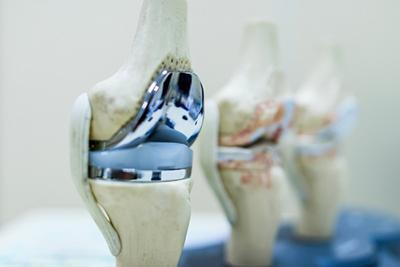
At Quinby Orthopedics, Dr. J. Scott Quinby, MD, specializes in helping patients determine when conservative treatments, like physical therapy or injections, are no longer enough. Knowing the signs that it’s time for a joint replacement can be the difference between "getting by" and truly living again.
1. Pain That Persists at Rest
The most common sign of advanced joint degeneration is pain that no longer waits for you to be active. If you find that your hip or knee aches all day, and now it is keeping you awake at night, that is a red flag. When pain is present even when you are lying down or sitting still, it often indicates that the "buffer" of cartilage in your joint has worn away, leading to bone-on-bone contact.
2. Difficulty with Daily Activities
We often ask our Heath, TX-area patients: "What have you stopped doing because of your joints?" It isn't just about giving up marathons, but also the small things. If you find yourself struggling to:
- Get in and out of a car or a bathtub.
- Put on your shoes and socks.
- Walk up the stairs at a local stadium or office building.
- Stand up after sitting for a short period.
If these daily tasks require a massive effort or the help of another person, your quality of life is being significantly compromised.
3. A Noticeable Change in Joint Structure or Sound
Your joints should move smoothly and silently. If you notice a visible "bowing" of the legs or a knock-kneed appearance that wasn't there before, the joint structure is shifting. Furthermore, if you feel or hear a grinding, clicking, or "popping" sensation (known as crepitus) when you move, it is often the sound of damaged bone and cartilage rubbing together.
4. Conservative Treatments Have Hit a Wall
Most patients start their journey with anti-inflammatory medications, cortisone shots, or specialized physical therapy. These are excellent first-line defenses. However, if you find that an injection that used to provide six months of relief now only lasts for two weeks, or if physical therapy is becoming too painful to perform, the joint may be beyond the point of "maintenance." At this stage, Dr. Quinby may discuss total or partial joint replacement as the most effective path forward.
5. Swelling and Stiffness That Won't Quit
Chronic inflammation is a hallmark of a failing joint. If your knee or hip feels warm to the touch or stays swollen despite icing and elevation, the internal environment of the joint is in distress. This stiffness often leads to a decreased "range of motion," meaning you can no longer fully straighten or bend the limb.
Why Choose Quinby Orthopedics for Your Care?
Deciding to undergo a joint replacement is a big step, but you’re in good hands. Dr. J. Scott Quinby combines years of surgical expertise with a patient-centered approach that serves our neighbors in Heath, Rockwall, Fate, and beyond. We utilize advanced surgical techniques designed to minimize recovery time and maximize the longevity of your new joint.
Our goal isn't just to perform a surgery, but to restore the freedom of movement that allows you to enjoy everything our corner of Texas has to offer.
Is joint pain limiting your world? Schedule a consultation with Dr. Quinby at our Heath, TX, office by calling (469) 929-0615.
- posted: Jan. 05, 2026
For many residents in Heath, Rockwall, and the surrounding areas, an active lifestyle is a point of pride. Whether you’re golfing at Buffalo Creek, hiking around Lake Ray Hubbard, or simply keeping up with grandchildren in Royse City, your joints are the "gears" that make it all possible. However, when those gears begin to wear down due to years of use or osteoarthritis, every movement can become a chore.
At Quinby Orthopedics, Dr. J. Scott Quinby, MD, specializes in helping patients determine when conservative treatments, like physical therapy or injections, are no longer enough. Knowing the signs that it’s time for a joint replacement can be the difference between "getting by" and truly living again.
1. Pain That Persists at Rest
The most common sign of advanced joint degeneration is pain that no longer waits for you to be active. If you find that your hip or knee aches all day, and now it is keeping you awake at night, that is a red flag. When pain is present even when you are lying down or sitting still, it often indicates that the "buffer" of cartilage in your joint has worn away, leading to bone-on-bone contact.
2. Difficulty with Daily Activities
We often ask our Heath, TX-area patients: "What have you stopped doing because of your joints?" It isn't just about giving up marathons, but also the small things. If you find yourself struggling to:
- Get in and out of a car or a bathtub.
- Put on your shoes and socks.
- Walk up the stairs at a local stadium or office building.
- Stand up after sitting for a short period.
If these daily tasks require a massive effort or the help of another person, your quality of life is being significantly compromised.
3. A Noticeable Change in Joint Structure or Sound
Your joints should move smoothly and silently. If you notice a visible "bowing" of the legs or a knock-kneed appearance that wasn't there before, the joint structure is shifting. Furthermore, if you feel or hear a grinding, clicking, or "popping" sensation (known as crepitus) when you move, it is often the sound of damaged bone and cartilage rubbing together.
4. Conservative Treatments Have Hit a Wall
Most patients start their journey with anti-inflammatory medications, cortisone shots, or specialized physical therapy. These are excellent first-line defenses. However, if you find that an injection that used to provide six months of relief now only lasts for two weeks, or if physical therapy is becoming too painful to perform, the joint may be beyond the point of "maintenance." At this stage, Dr. Quinby may discuss total or partial joint replacement as the most effective path forward.
5. Swelling and Stiffness That Won't Quit
Chronic inflammation is a hallmark of a failing joint. If your knee or hip feels warm to the touch or stays swollen despite icing and elevation, the internal environment of the joint is in distress. This stiffness often leads to a decreased "range of motion," meaning you can no longer fully straighten or bend the limb.
Why Choose Quinby Orthopedics for Your Care?
Deciding to undergo a joint replacement is a big step, but you’re in good hands. Dr. J. Scott Quinby combines years of surgical expertise with a patient-centered approach that serves our neighbors in Heath, Rockwall, Fate, and beyond. We utilize advanced surgical techniques designed to minimize recovery time and maximize the longevity of your new joint.
Our goal isn't just to perform a surgery, but to restore the freedom of movement that allows you to enjoy everything our corner of Texas has to offer.
Is joint pain limiting your world? Schedule a consultation with Dr. Quinby at our Heath, TX, office by calling (469) 929-0615.
Hours of Operation
Monday
8:30 am - 4:30 pm
Tuesday
8:30 am - 4:30 pm
Wednesday
8:30 am - 4:30 pm
Thursday
8:30 am - 4:30 pm
Friday
8:30 am - 4:30 pm
Saturday
Closed
Sunday
Closed